Orbital Engine
A real-time 3D solar system you can fly through: animated planetary orbits, a free-roam camera, an instanced asteroid belt of thousands, dynamic lighting, and swappable skyboxes. Built on my own C++ application framework.
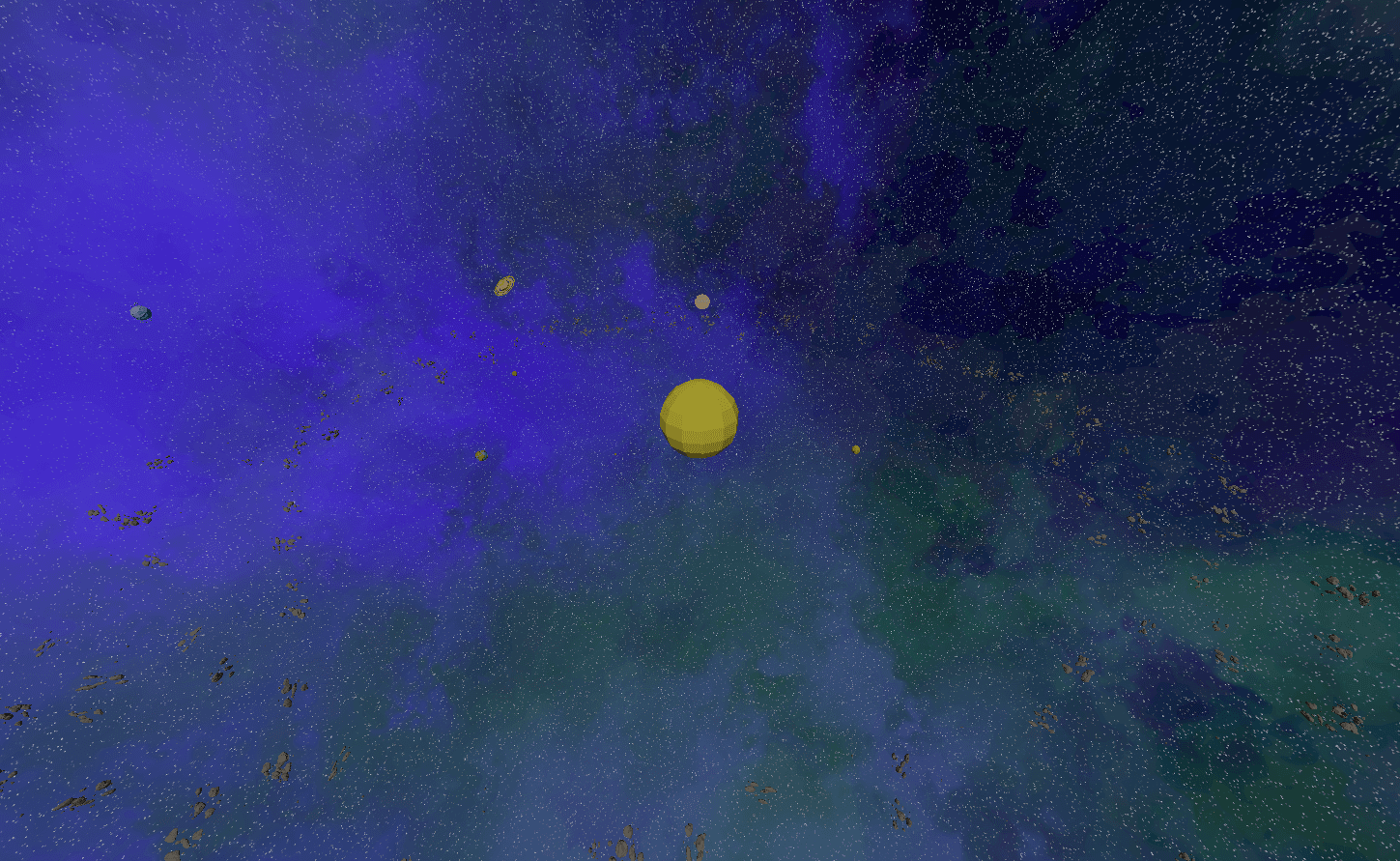
Orbital Engine is a real-time 3D solar system you can fly through. I built it for two reasons at once: I've always been a sucker for space, and I needed something demanding to push the 3D side of my own C++ application framework. A solar system turns out to be a great stress test, plenty of bodies in motion, real lighting, and a camera that has to be able to go anywhere.
Why I built it
I'd written my own C++ application framework (Lumina) and wanted to actually lean on its 3D path, not just prove it compiled. Orbiting planets, thousands of asteroids, dynamic lights, and a wrap-around skybox exercise most of a renderer at once, so if the scene ran smoothly, the framework underneath was earning its keep. And honestly, space is just a joy to render.
What it does
- A solar system in motion. Planets on animated orbits with adjustable time scaling, so you can crawl through an hour or race through a year.
- A camera that goes anywhere. Free-roam, planet-following, and preset shots: top-down, inner system, the belt, a sun close-up.
- An instanced asteroid belt. Thousands of individual rocks, drawn in one pass and toggleable.
- Real lighting. A directional sun and point lights driving the illumination.
- Swappable skyboxes. Tint, intensity, and rotation on a wrap-around space backdrop.
- A live performance overlay. FPS, draw calls, and triangle counts, so the cost of a change is never a mystery.
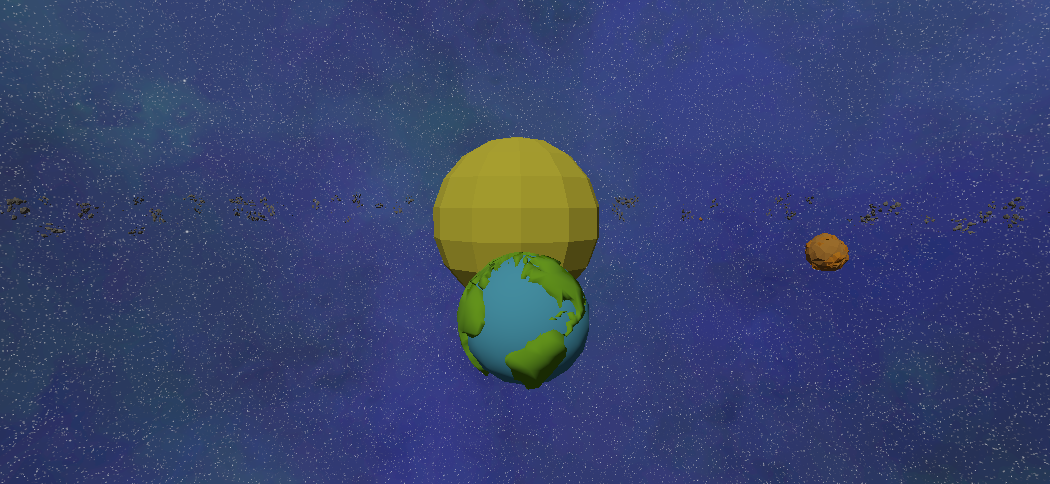 Earth up close, showing the material system
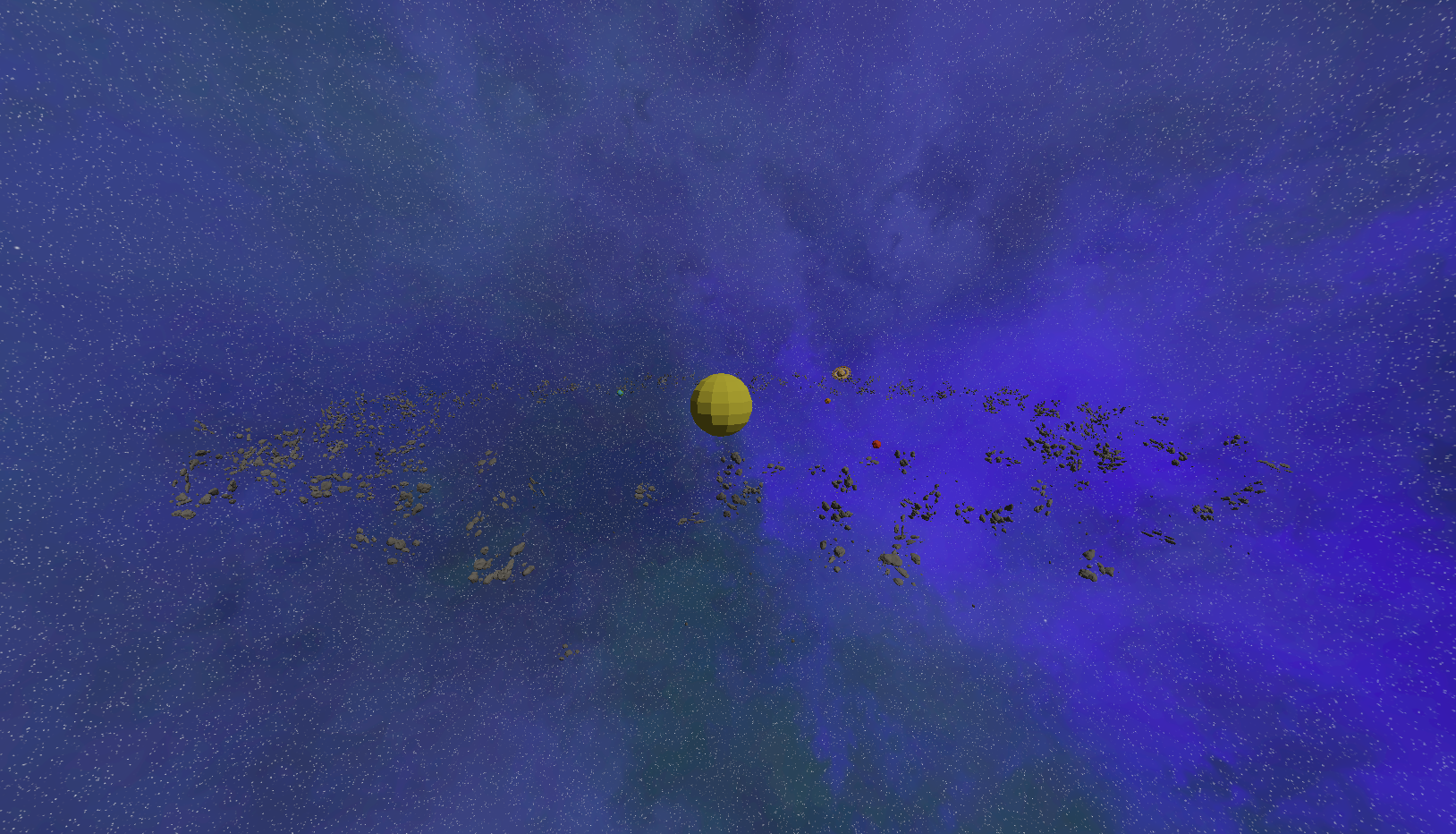 The instanced asteroid belt
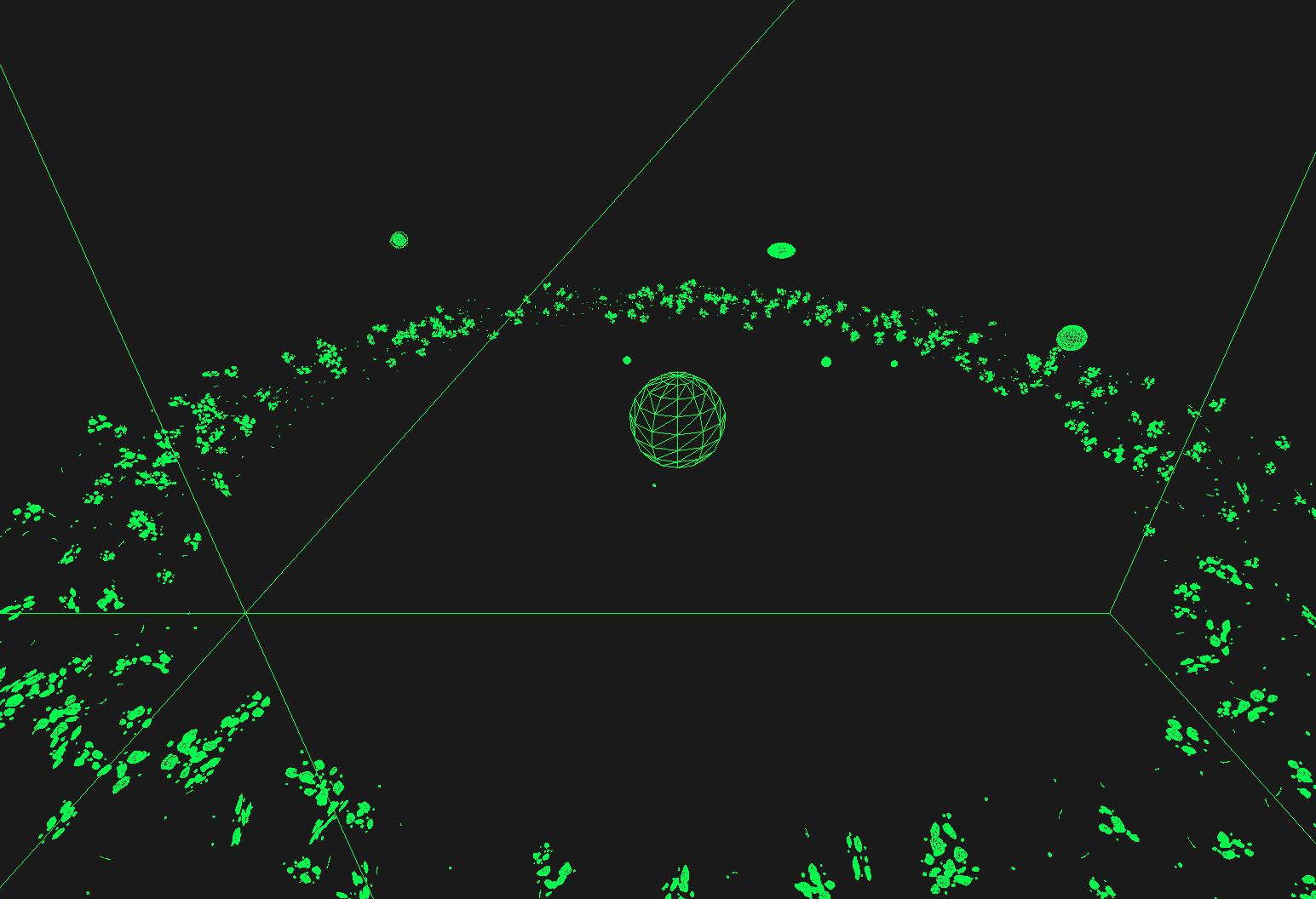 Wireframe mode, exposing the underlying mesh
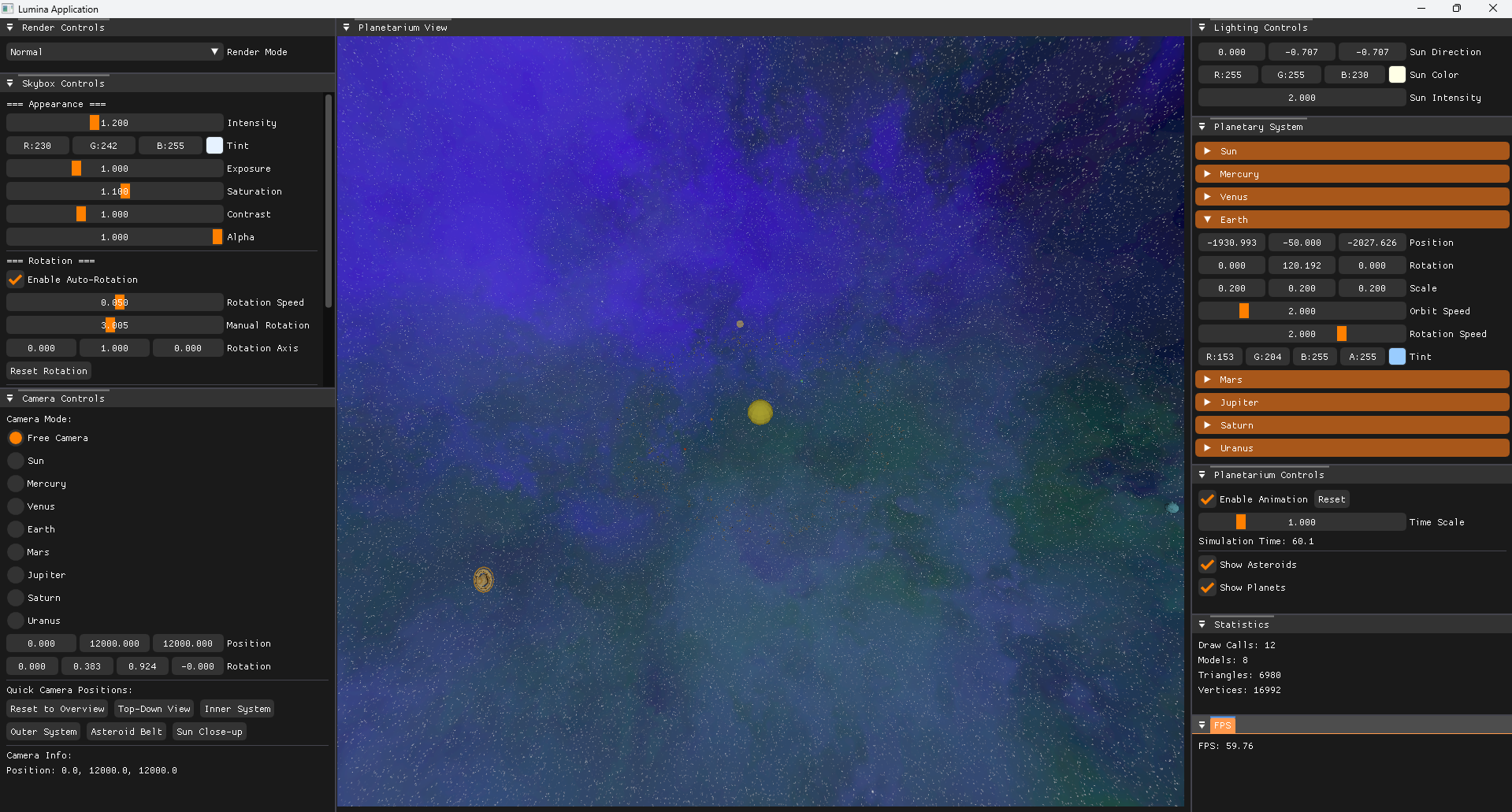 Control panels for camera, lighting, and the simulation
The rendering, and the part I like
Everything runs through the framework's OpenGL pipeline: a model registry for loading meshes, a shader path that handles multiple light sources, and a quaternion camera so there's no gimbal lock when you fly straight up over the sun.
The asteroid belt is the piece I'm happiest with. Thousands of asteroids aren't thousands of draw calls, they're one instanced draw: the mesh is uploaded once and the GPU stamps it across the belt from per-instance transforms. That's the difference between a slideshow and something you can actually orbit through.
Three render modes, normal, wireframe, and points, let you peel the scene back to the geometry, and a skybox pass wraps the whole thing in a space environment you can retune on the fly:
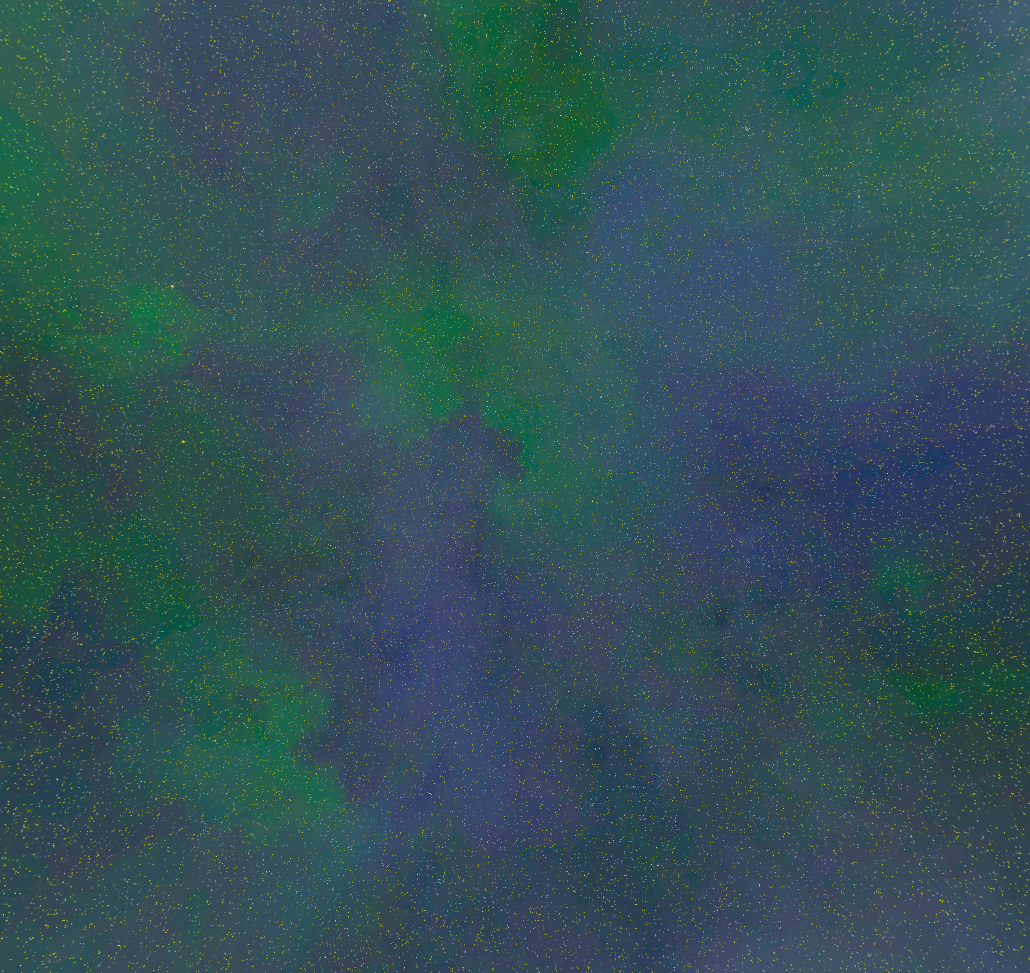 Default space
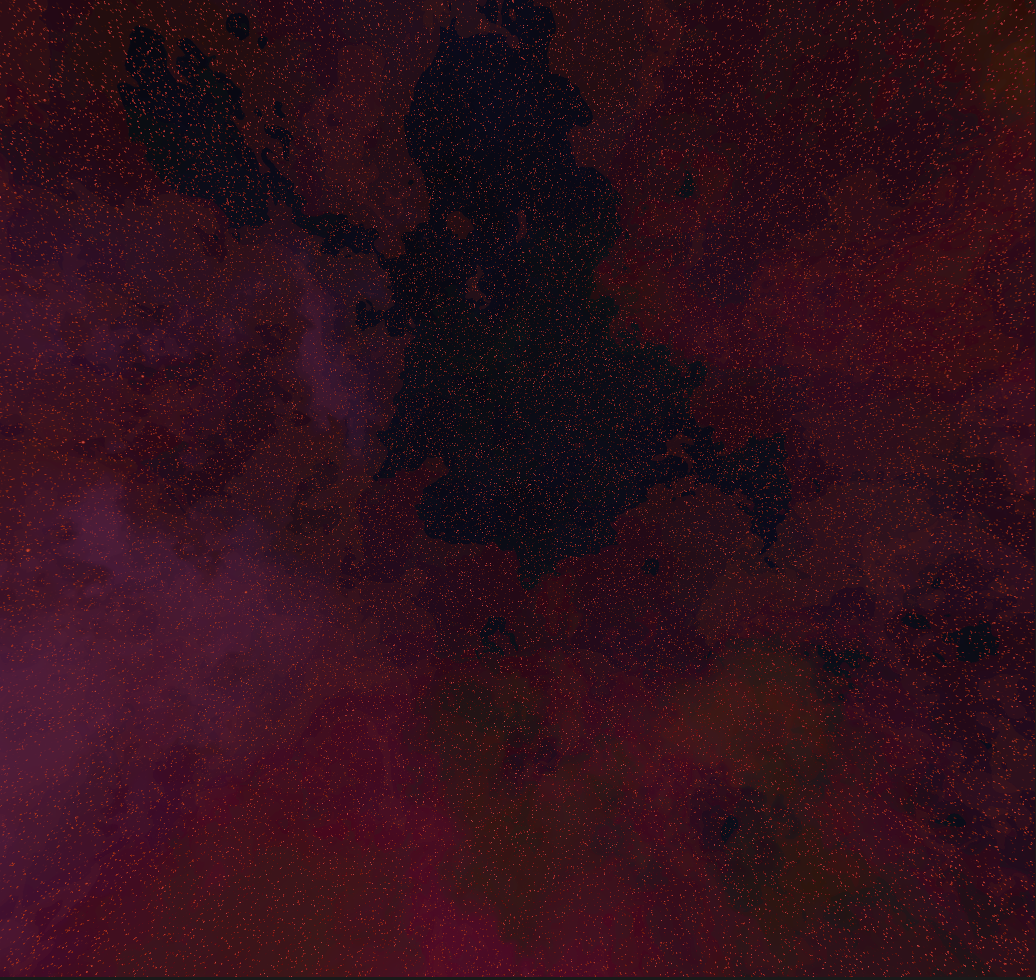 Warm galaxy
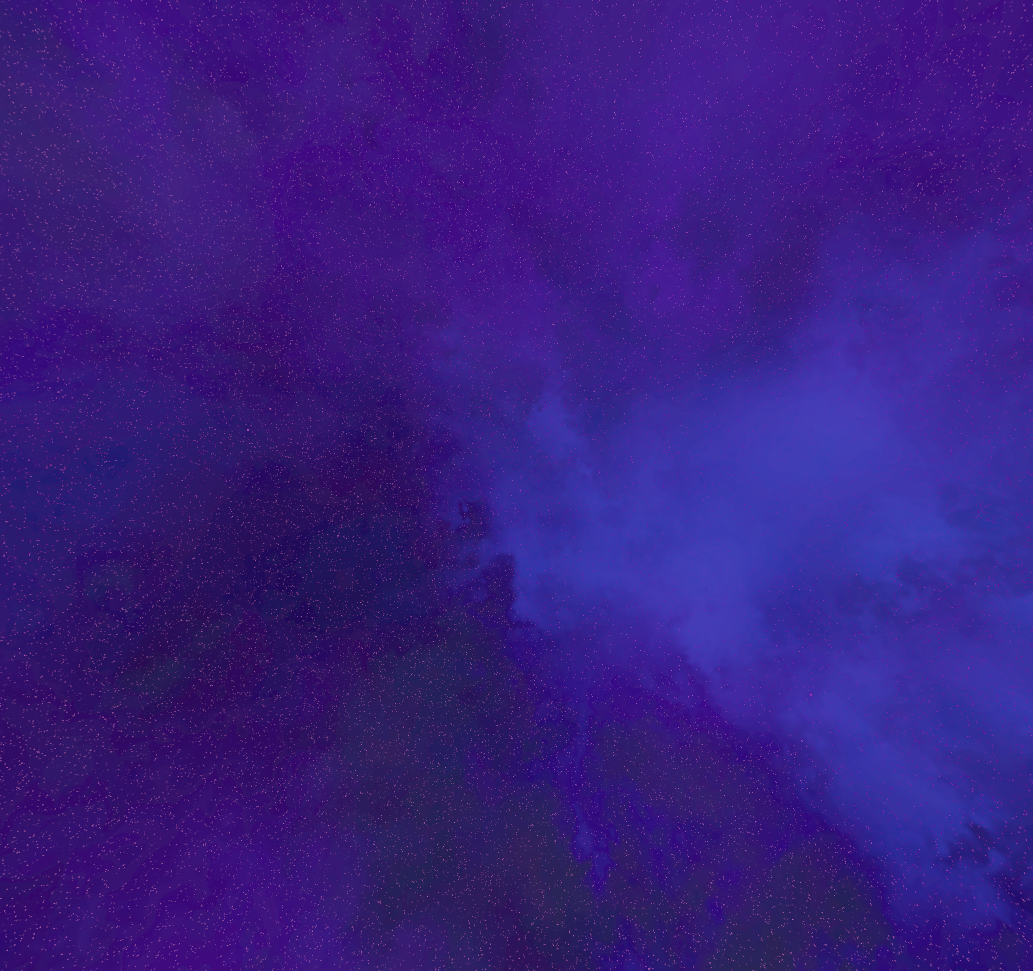 Cool nebula
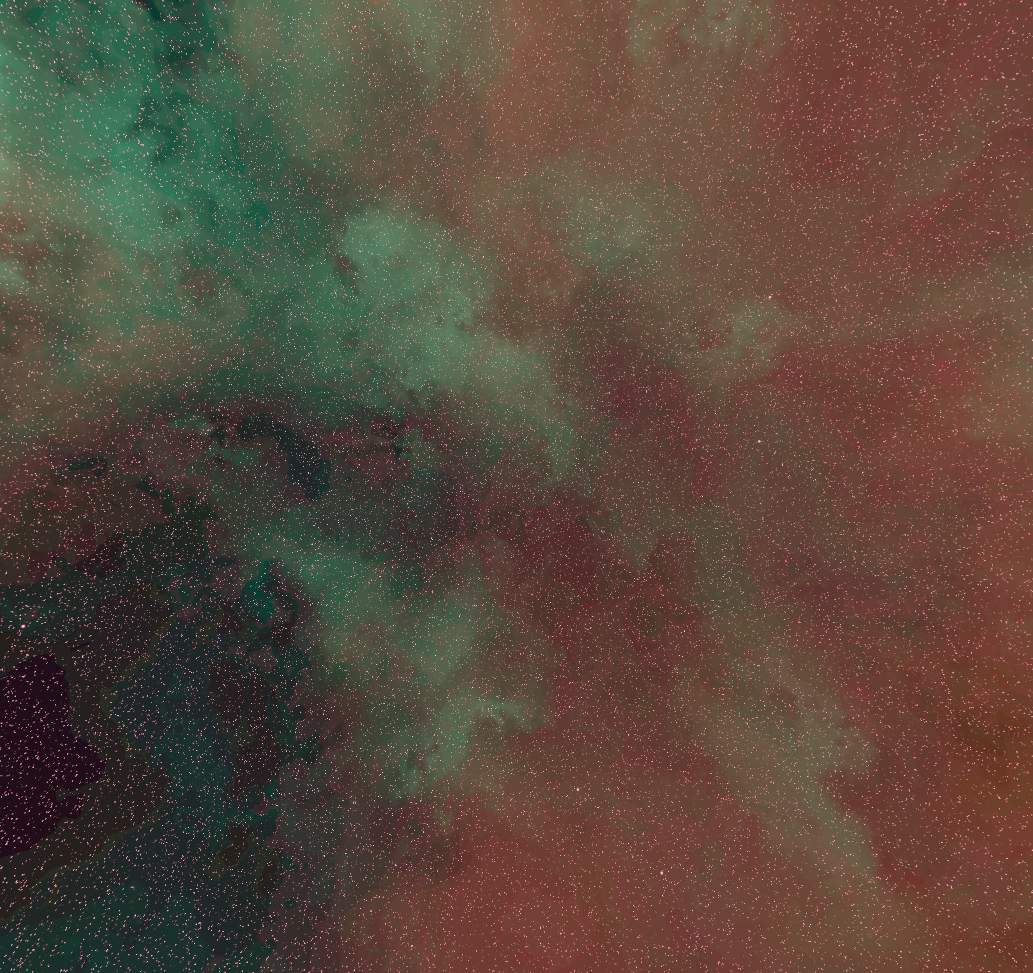 Rotating galaxy
Where it's going
Orbital Engine is one of the projects I most want to come back to and rebuild properly, so a major overhaul is on the way. What's here is where it stands today, not the finished form.
Tech stack
| Layer | Technology | Role |
|---|---|---|
| Language | C++ | The simulation and rendering logic |
| Graphics | OpenGL 3.3+ | The pipeline the whole scene runs on |
| Framework | Lumina, my C++ application framework | The app shell: windowing, the OpenGL layer, and the UI |
| UI | Dear ImGui | The camera, lighting, and simulation control panels |
| Build | Visual Studio (Windows) | Where it compiles and runs |